
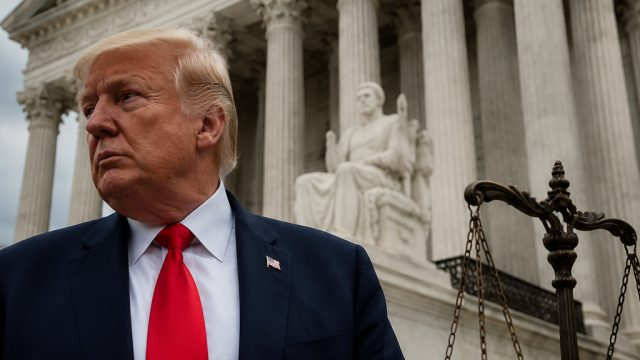
In a significant turn of events, a federal judge has issued a ruling that puts a damper on former President Donald Trump's voter registration policies, specifically the requirement for proof of citizenship. This decision comes at a time when the political landscape is fraught with tension surrounding voter rights and election integrity. The implications of this ruling extend beyond just the immediate effects on Trump's policies, raising critical questions about the future of voting procedures in America.
The Ruling Explained
The judge's decision to block the proof-of-citizenship requirement represents a pivotal moment in the ongoing debate over voting rights. The ruling not only nullifies Trump's directive but also underscores the role of federal courts in shaping election law. Critics of the requirement argued that it disproportionately affects minority communities and creates unnecessary barriers to voting.
Understanding the Legal Landscape
Legal experts highlight that this ruling aligns with a growing trend among federal judges to challenge state-level voting restrictions. As states implement more stringent voting laws, the judiciary's role becomes increasingly crucial in ensuring fair access to the electoral process. Key points surrounding this legal decision include:
- The ruling underscores the judiciary's responsibility to uphold civil rights.
- It raises questions about the validity of state-enforced voting regulations.
- The decision may inspire other challenges to restrictive voting laws across the nation.
Reactions from the White House
The White House responded swiftly to the ruling, with officials expressing concerns about the implications for electoral integrity. The administration views the court's decision as a significant victory for those advocating for more accessible voting processes.
Statements from Officials
White House officials emphasized the importance of protecting voting rights, stating that every eligible American should be able to participate in elections without undue barriers. Their statements illustrate the administration's commitment to ensuring that the electoral process remains fair and inclusive.
Impact on Upcoming Elections
This ruling arrives just as the nation prepares for critical elections, heightening its significance. With the 2024 elections on the horizon, the potential for further legal challenges to voting restrictions is likely to increase. Political analysts suggest that this ruling could set a precedent that influences upcoming election laws across various states.
Potential Outcomes
As the situation evolves, several outcomes may arise:
- Increased legal challenges to restrictive voting laws by advocacy groups.
- A shift in public opinion regarding voter ID laws and their implementation.
- Potential legislative action at the federal level to protect voting rights.
Conclusion: A Pivotal Moment for Voting Rights
The federal ruling against Trump's proof-of-citizenship voting requirement is more than just a legal victory; it's a critical moment for the future of voting rights in America. As the nation grapples with issues of access and equity in the electoral process, this decision serves as a reminder of the ongoing struggle to ensure that every voice is heard and counted. As we move closer to upcoming elections, the implications of this ruling will undoubtedly be felt across the country, shaping the dialogue around voting rights for years to come.